A battery’s history matters: introducing REBATTEX Recall-check
Giving an EV battery a second life starts with understanding its first. Before a used battery changes hands, buyers need to understand its identity, condition and history. Capacity and diagnostic data are important parts of that assessment. So is another essential question: has the battery been affected by a recall campaign, and has the required action been taken?
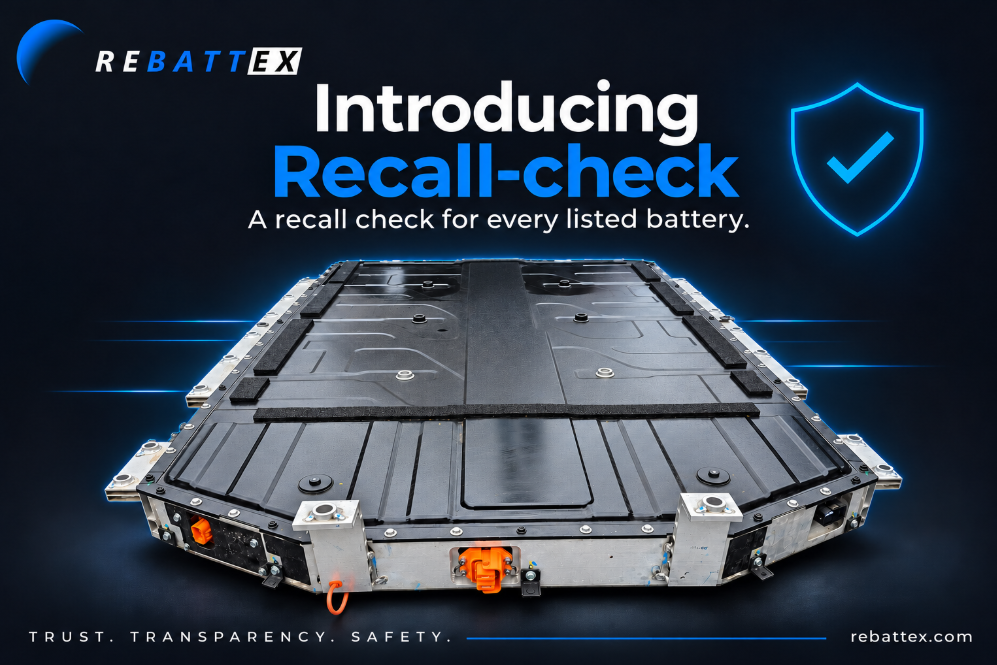
Giving an EV battery a second life starts with understanding its first. Before a used battery changes hands, buyers need to understand its identity, condition and history. Capacity and diagnostic data are important parts of that assessment. So is another essential question: has the battery been affected by a recall campaign, and has the required action been taken? That is why we are launching Recall-check at REBATTEX , adding recall screening to the documentation and verification process for batteries listed on our platform. Our aim is straightforward: to make recall history a visible part of
the transaction and help buyers and sellers make better-informed decisions. Why recall history matters A recall identifies an issue that requires attention under the manufacturer’s campaign instructions. For high-voltage batteries, the response can involve inspection, software updates or replacement of affected components. Volkswagen’s published battery recall information, for example, describes a process that can include checks, software updates and, where necessary, module replacement. For the used battery market, identifying a campaign is only the beginning. The next questions are more
specific: does the campaign apply to the battery being offered? What action was required? And what evidence establishes that the relevant work was completed? A general recall notice and a record of completed corrective work answer different questions. Both matter when assessing a battery’s history. Diagnostics and recall checks answer different questions Diagnostic information helps buyers assess the battery’s reported condition and performance. Recall screening adds information about identified issues and the manufacturer’s prescribed response. These checks complement each other. A reported
State of Health value should not be treated as evidence that recall work has been completed. Equally, completion of a recall campaign does not establish the battery’s overall condition or suitability for a particular application. A responsible assessment brings these pieces together: battery identification, diagnostic information, recall history and supporting documentation. The value lies in understanding what each record establishes, and where further information is needed. What Recall-check adds at REBATTEX Every battery listed at REBATTEX undergoes a check for relevant recall campaigns
and, where applicable, whether the required action has been taken. The purpose is to bring an important part of the battery’s history into the transaction, alongside the information buyers already need to assess an offer. For sellers, this makes recall documentation part of presenting a battery transparently. For buyers, it adds another basis for evaluating the available evidence before making a purchasing decision. Recall-check supports that assessment. It does not replace physical inspection, technical diagnostics or the assessment of suitability for the intended use. Traceability must
follow the battery A battery may move from its original vehicle into a repair workshop, a dismantler’s inventory or a new application. Our view is that the relevant history should remain connected to it throughout those transitions. That makes the link between the physical battery and its documentation particularly important. The donor vehicle’s identity, battery identifiers and records of previous work help establish that connection. If a pack has been replaced, or modules have been changed, the documentation needs to make clear which battery or components the records concern. This is the
practical value of traceability: helping the next owner understand what they are buying and the evidence behind it. Transparency builds confidence in reuse At REBATTEX, we believe the development of the European used EV battery market depends on making relevant information easier to identify, assess and share. Price and availability help connect buyers and sellers. Documentation helps them move forward with confidence. Recall-check is another step in building that foundation. It brings recall history into the conversation before a transaction, when buyers and sellers can use it to ask
questions and resolve gaps. Trust, transparency and safety should remain central as batteries move into their next life. Giving batteries a second life means taking their first life seriously. Trace it. Trade it. Trust it. Discover more at rebattex.com .