Cell-to-Module, Cell-to-Pack and Cell-to-Chassis: The Future of EV Battery Reuse
As EV battery architecture evolves, so does the economics of battery reuse. But will newer battery designs make Europe's circular battery economy more difficult? The automotive industry is moving from traditional modular batteries towards increasingly integrated designs. While these innovations improve manufacturing efficiency, energy density and vehicle performance, they also fundamentally change how batteries can be recovered and reused. Understanding these differences is essential to predicting where Europe's growing volumes of used EV batteries will ultimately end up. Three architectures, three different reuse opportunities
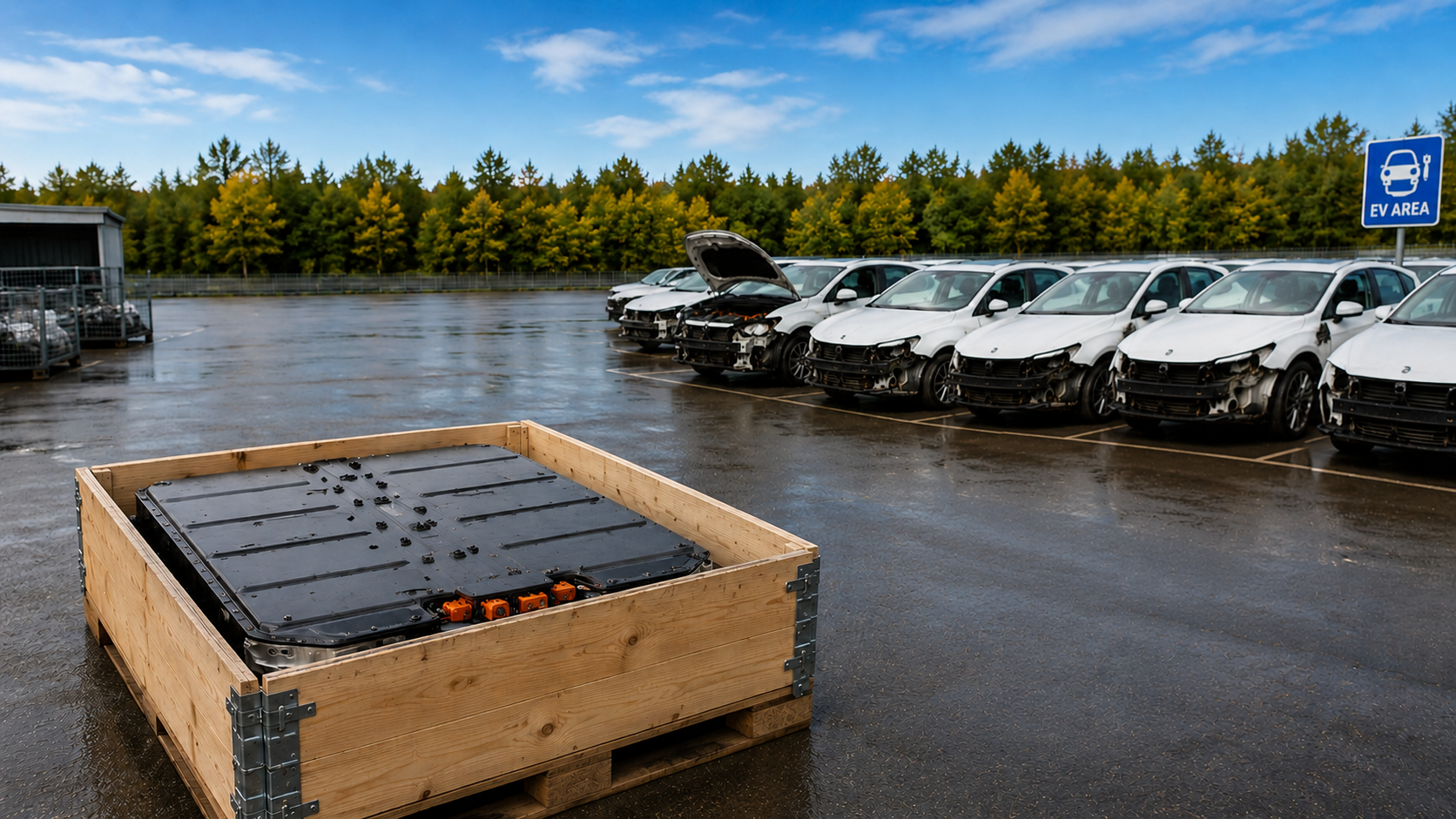
As EV battery architecture evolves, so does the economics of battery reuse. But will newer battery designs make Europe's circular battery economy more difficult? The automotive industry is moving from traditional modular batteries towards increasingly integrated designs. While these innovations improve manufacturing efficiency, energy density and vehicle performance, they also fundamentally change how batteries can be recovered and reused. Understanding these differences is essential to predicting where Europe's growing volumes of used EV batteries will ultimately end up. Three architectures,
three different reuse opportunities Cell-to-Module (CTM): Maximum flexibility Traditional EV batteries consist of individual cells assembled into modules, which are subsequently integrated into complete battery packs. This modular architecture offers several reuse pathways. Healthy packs can replace damaged automotive batteries, while individual modules can be recovered for vehicle repairs, remanufacturing or stationary energy storage. Importantly, even when part of a battery is damaged, its remaining modules may retain considerable commercial value. Cell-to-Pack (CTP): Fewer reuse options
Cell-to-pack technology eliminates conventional modules by integrating cells directly into the battery pack. Although this reduces manufacturing costs and improves packaging efficiency, it complicates second-life applications. Without removable modules, recovering individual cells becomes considerably more complex and potentially uneconomical. Consequently, reuse increasingly becomes a choice between retaining the complete battery for automotive or stationary applications and sending it for recycling. Cell-to-Chassis (CTC): Integration creates new challenges Cell-to-chassis technology goes
further by integrating the battery structure into the vehicle itself. While this can improve structural efficiency and reduce weight, recovering the battery may require extensive dismantling. For damaged vehicles, extraction costs and potential structural damage could significantly reduce the economic viability of battery reuse. The more integrated the battery, the more important its accessibility and repairability become. Europe's regulatory challenge: What happens when a battery becomes twelve modules? The EU Battery Regulation (2023/1542) establishes an important framework for battery
traceability, reuse and recycling. From February 2027, newly placed EV batteries must have a digital Battery Passport, providing information about their identity, composition and lifecycle. However, modular batteries introduce a practical challenge. Imagine dismantling a 75 kWh battery containing twelve modules. The original battery has an identifiable history, but what happens when those modules are separated and independently traded? Each recovered module needs reliable documentation establishing its origin, technical condition and relationship to the original battery. Although EU
legislation recognises module-level operations and establishes traceability requirements, implementing consistent module-level identification and documentation remains a significant industry challenge. Without reliable diagnostics and traceability, potentially reusable modules risk losing their commercial value or entering poorly documented supply chains. Where will Europe's used batteries ultimately go? As EV volumes increase, battery architecture, condition and economics will determine the distribution of second-life applications. Five principal pathways are likely to emerge: Reuse pathway
Most suitable batteries Automotive replacement Healthy complete packs with existing vehicle demand Stationary energy storage Complete packs suitable for integration into energy-storage systems Module reuse Modular batteries suitable for repair, remanufacturing or repurposing Cell-level reuse Selected batteries where individual cell recovery is economically viable Recycling Batteries where further reuse is unsafe, technically impractical or uneconomical Complete-pack reuse is likely to become increasingly important. Preserving the original battery architecture avoids expensive dismantling and
retains the engineering already invested in the product. Modular batteries will continue supporting a secondary market for individual modules, particularly for automotive repairs and specialised energy-storage applications. However, as cell-to-pack and cell-to-chassis technologies gain market share, opportunities for economically recovering individual components may diminish. This could ultimately concentrate reuse volumes into two principal destinations: complete-pack reuse and material recycling. The actual distribution will depend on future battery designs, extraction costs, vehicle
replacement demand and stationary-storage economics. Battery architecture will determine residual value Two batteries with identical capacity, chemistry and State of Health may have significantly different second-life values. A modular battery potentially offers several resale opportunities. An integrated battery may have fewer options, particularly if it has sustained physical damage. Battery valuation must therefore evolve beyond capacity and State of Health to incorporate architecture, diagnostics, traceability, extraction costs and actual market demand. For Europe's circular battery
economy, the challenge is not simply recovering batteries. It is identifying their most appropriate next application. The future of EV battery reuse is not about giving every battery a second life. It is about finding the right next life for every battery.