White Paper: Europe Risks Losing the Equivalent of Four Gigafactories Unless It Builds a Circular Battery Market
Europe's largest future battery reserve is already on our roads - not in the ground. A new white paper from REBATTEX reveals that by 2035, around 180 GWh of battery capacity - he equivalent of four gigafactories - will be embedded in crashed, dismantled and end-of-life electric vehicles across Europe. Rather than focusing solely on manufacturing and recycling, Europe must now build the market infrastructure needed to keep these batteries in productive use through repair, reuse, remanufacturing and repurposing.
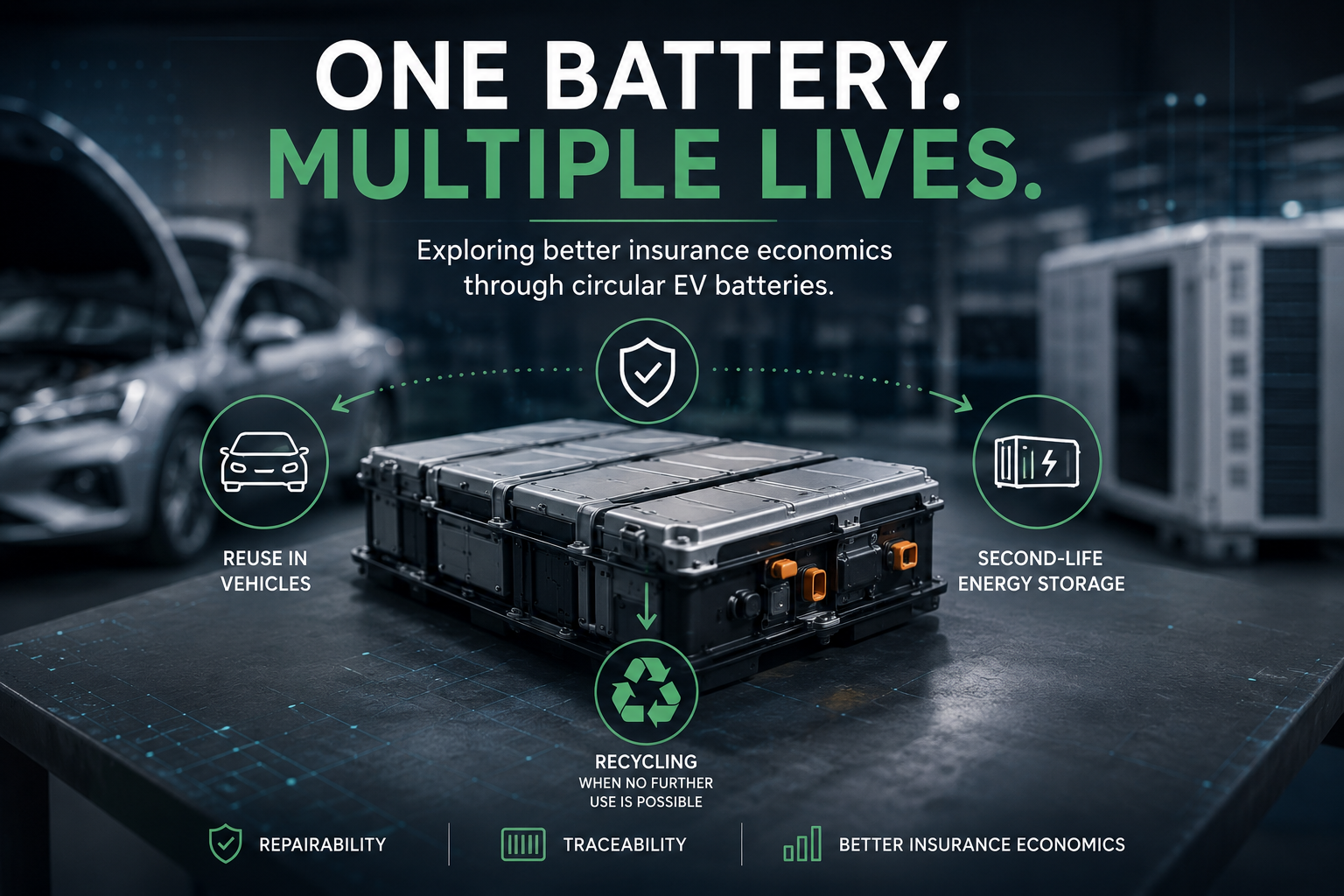
Europe has invested hundreds of billions of euros to establish a competitive battery industry. But while the focus remains on new battery production, mining and recycling, one of Europe's largest future battery resources is already here - embedded in accident-damaged, dismantled and end-of-life electric vehicles. A new white paper from REBATTEX, How Europe Can Avoid Losing Four Gigafactories: Building the Market Infrastructure for Circular EV Batteries , highlights a growing challenge that has received far too little attention. By 2035, approximately 180 GWh of battery capacity -
equivalent to the annual production of around four large gigafactories - could become available from decommissioned EVs across Europe. Most of these batteries will still retain significant technical and economic value and could be repaired, reused, remanufactured or repurposed instead of being prematurely recycled. The report argues that Europe does not primarily face a battery supply problem - it faces a market infrastructure problem . While major regulatory initiatives such as the Battery Regulation and Battery Passport improve traceability and transparency, they do not create the
trusted market mechanisms needed for batteries to be safely valued, traded, transported and reused. Without common standards, diagnostics, transaction processes and liability frameworks, billions of euros in value risk remaining locked in a fragmented market. The white paper calls on policymakers and industry to complement existing battery policies with investments in the commercial infrastructure that enables circular battery markets. This includes common standards for battery diagnostics and State of Health assessment, interoperable data, trusted transaction frameworks and cross-border
market mechanisms that allow batteries to remain in productive use for as long as technically, economically and environmentally possible. As Europe continues to strengthen its industrial competitiveness and strategic autonomy, the next phase of the battery transition should not only focus on producing more batteries, but also on unlocking the enormous value already driving on Europe's roads.